In the fast-paced B2B manufacturing and engineering sectors, bottlenecks during product development are costly. When legacy machinery breaks down or a crucial design file vanishes, production grinds to a halt. Teams often spend weeks manually measuring parts and drafting new CAD models from scratch.
Thankfully, digital transformation offers a faster solution. Understanding the benefits of 3d reverse engineering is the key to eliminating these operational headaches. By converting physical objects into highly accurate digital blueprints, B2B professionals can optimize workflows and slash development cycles.
This guide explores how adopting 3D scanning and reconstruction technology directly improves your team’s output and efficiency.
What is 3D Reverse Engineering?
3D Reverse Engineering is the process of scanning a physical object—such as a machine part, tool, or consumer product—to capture its exact geometry and convert it into a digital 3D CAD model.
Instead of designing a component from a blank canvas, engineers use precise data from laser scanners or structured light systems. This digital twin serves as a perfect foundation for manufacturing, modification, or quality control. It bridges the gap between physical hardware and digital design environments.
Top Benefits of 3D Reverse Engineering for B2B Teams
Implementing optical scanning into your engineering workflow unlocks several strategic advantages that give B2B companies a competitive edge.
1. Drastically Reduced Time-to-Market
Traditional prototyping relies on tedious trial-and-error cycles. Engineers manually measure parts using calipers, build a prototype, test it, and repeat. One of the primary benefits of 3d reverse engineering is the compression of this timeline. High-resolution scans capture complex surface geometries in minutes, allowing your design team to skip days of manual drafting.
2. Seamless Legacy Part Replication
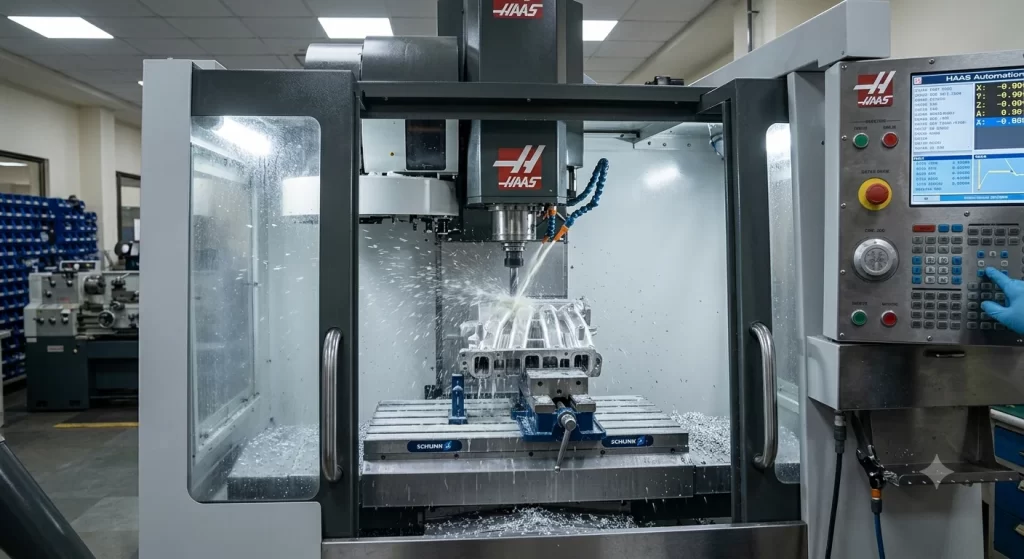
Every manufacturing facility relies on older, legacy machinery. When a critical component fails on a machine built thirty years ago, finding a replacement part can be nearly impossible. 3D scanning allows you to reverse engineer the broken component, recreate the digital blueprint, and send it directly to a CNC machine or 3D printer for rapid fabrication.
3. Accelerated Competitive Product Analysis
Understanding competitor products is vital for market positioning. Reverse engineering allows your R&D team to analyze the structural integrity, material distribution, and design choices of competing products safely and accurately. This accelerates your own innovation cycles without infringing on intellectual property.
How 3D Reverse Engineering Directly Drives B2B Productivity
Productivity in a B2B setting is measured by efficiency, accuracy, and minimized downtime. Here is exactly how incorporating 3D scanning technology optimizes your engineering ecosystem:
- Minimizes Human Error: Hand-measuring intricate, organic shapes often leads to calculation mistakes. A single millimeter error can ruin an entire production run. 3D scanners offer micron-level accuracy, ensuring your CAD models are right the first time.
- Enhances Collaboration: Digital CAD files generated from physical parts can be instantly shared across global teams. Suppliers, manufacturers, and stakeholders can review design iterations in real time, eliminating communication delays.
- Optimizes Quality Control (QC): By comparing a manufactured part’s scan data directly against the original CAD file, QC teams can instantly spot deviations. This rapid inspection loop keeps production lines running smoothly and reduces scrap rates.
Real-World Example: Accelerating the Supply Chain
Consider an industrial pump manufacturer that needs to update an old housing design to accommodate a new, highly efficient electronic valve.
Without reverse engineering, the team would spend roughly 40 hours manually measuring the intricate internal cavities of the old pump. By utilizing a blue-light 3D scanner, the engineering team can capture the entire geometry in less than an hour. The resulting mesh file is cleaned and converted into a parametric CAD model by afternoon.
Ultimately, this workflow reduces design prep time by over 80%, allowing the company to move into production weeks ahead of schedule. The supply chain team as well as sales team mostly lack CAD experience and therefore, using AV View MultiCAD Viewer can be beneficial for them as it has a very gentle learning curve.
Conclusion: Future-Proof Your Production Line
Leveraging the benefits of 3d reverse engineering is no longer a luxury for forward-thinking firms—it is a baseline requirement for maintaining B2B productivity. By accelerating product development, preserving legacy hardware, and removing human error from the design loop, your team can focus on what they do best: innovating.
Ready to optimize your design pipeline and scale your manufacturing efficiency? Contact our engineering consultation team today to discover the right 3D scanning hardware and software solutions for your business.